
ANSWER-FIRST BUYER GUIDE
Oversized Custom Medals: Size, Weight & Design Guide
There is no universal industry standard for an “oversized” medal. For practical planning in this guide, we use 80 mm and above in the medal’s longest dimension. At this scale, size must be planned together with weight, thickness, material, relief, ribbon, packaging and freight—not chosen as an isolated number.
- Planning range
- 80 mm and above
- Key control
- Weight before tooling
- Best practice
- Approve a physical sample
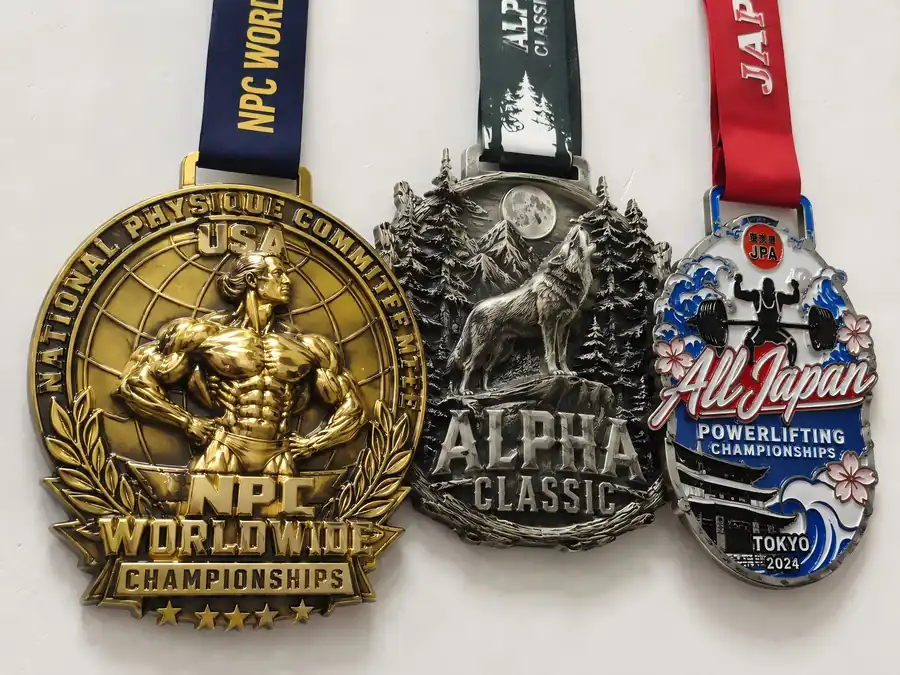
- Zinc Alloy
- Acrylic
- Wood
- Brass
- 999 Copper
- Silver
THE SHORT ANSWER
How should an oversized medal be planned?
Start with the award moment and artwork, then define an 80 mm+ planning size. Ask the manufacturer to model the actual construction and estimate weight before tooling. Balance thickness, relief and open areas; test the ribbon and attachment; design packaging around the finished dimensions; and approve a physical sample before mass production.
- Purpose and wearing time
- Longest dimension and shape
- Material, thickness and construction
- Estimated weight and balance
- Ribbon, packaging and delivery
01 · SIZE DEFINITION
What counts as an oversized custom medal?
No single trade body or factory rule defines oversized medals by one diameter. A size that feels unusually large in one product line may be normal in another. Shape also matters: an 80 mm round medal and a tall 80 mm irregular medal do not have the same metal area or visual presence.
For this guide, 80 mm or more in the longest dimension is the planning range. This is a decision threshold, not an industry claim. From that point upward, buyers should request an explicit review of weight, balance, attachment strength, packaging and freight.
The inch values are rounded conversions of the medal’s longest dimension. For irregular shapes, this is not necessarily a diameter, and none of these sizes predicts finished weight.
Where oversized medals work well
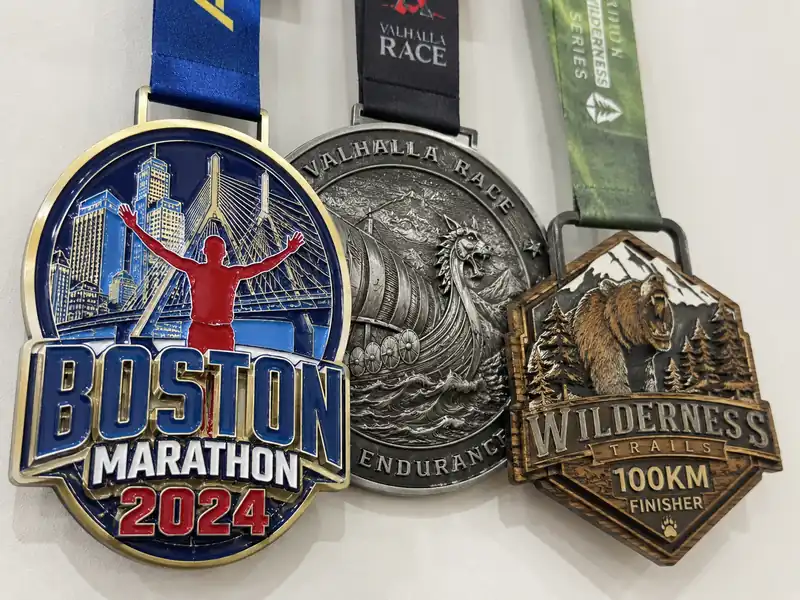
- Bodybuilding competitions
- Powerlifting championships
- Marathons and endurance events
- Championship finals and invitationals
- Commemorative or presentation awards
- Collector-focused event merchandise
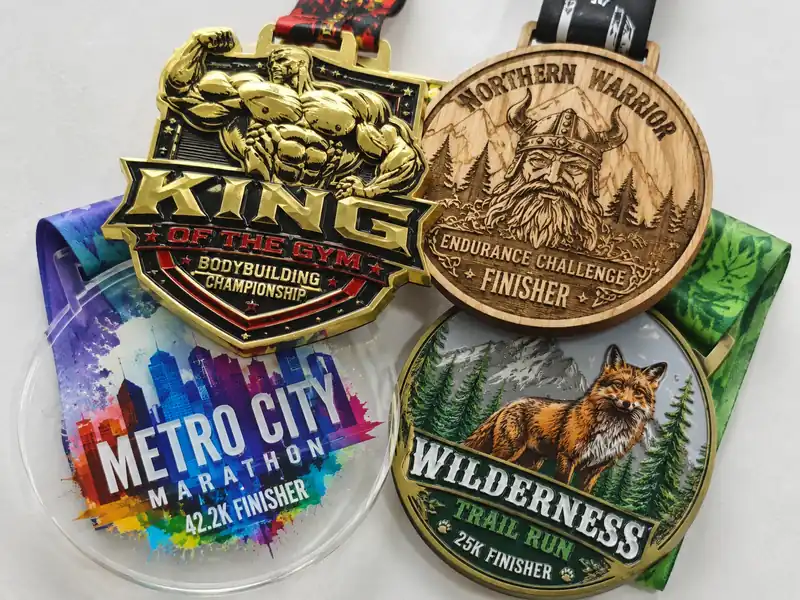
APPLICATION SHOULD DRIVE SCALE
Plan the medal around how it will be seen, worn and kept.
A short podium presentation can tolerate a different weight from an award worn for hours after a race. A collector piece may prioritize relief and display value, while a mass-participation event may prioritize comfort, packing density and freight efficiency.
02 · SIZE, WEIGHT & THICKNESS
Why does weight rise so quickly?
Medal weight is driven by material density × actual metal volume. For the same shape, material and average thickness, face area increases roughly with the square of diameter. A 100 mm round face has about 56% more area than an 80 mm round face before changes to cutouts, relief or thickness are considered.
That comparison is useful for planning, but it is not a finished-weight promise. A deeply recessed back, openwork design or mixed-material insert can weigh much less than a solid medal of the same outside dimensions.
Width, height and shape determine the available face area.
Use average metal volume, not only the thickest relief point.
Zinc alloy, iron, brass, wood and acrylic have different mass.
Openwork, recesses, layers and inserts change total volume.
How to reduce weight without losing impact
- Reduce average body thickness while keeping critical areas strong.
- Add openwork where it supports the artwork and does not create fragile bridges.
- Recess or hollow the back instead of using a fully solid body.
- Use selective high relief rather than making every area thick.
- Combine metal with lighter acrylic, wood or printed inserts where appropriate.
- Engineer separate layers only when the attachment method and balance are verified.
- Reduce the footprint if the required weight cannot be reached safely.
Ask for two weight checks: a calculated estimate from the approved model before tooling, and an actual weight from the physical sample before production.
03 · MATERIALS & CONSTRUCTION
Which material should you choose?
| Material / route | Why buyers consider it | What to verify at oversized scale |
|---|---|---|
| Zinc alloy | Detailed casting, irregular outlines, relief, openwork and layered structures. | Calculated weight, thin bridges, relief transitions, plating coverage and attachment strength. |
| Iron or brass | Useful for flatter, die-struck concepts and traditional metal finishes. | Feasible size, tooling route, edge comfort, flatness and weight at the chosen gauge. |
| Acrylic | Lower mass, transparent effects and full-color printing. | Scratch resistance, edge finish, print protection, cracking risk and hardware interface. |
| Wood | Warm natural appearance and comparatively light construction. | Grain variation, engraving contrast, moisture protection, edge durability and thickness tolerance. |
| Mixed materials | Combines metal presence with lighter or colorful inserts. | Bonding or fasteners, expansion differences, alignment, impact resistance and long-term stability. |
Thickness should follow the structure rather than a generic number. Define the base thickness, highest relief point, edge profile and any stacked layers separately. A thick edge does not prove that the whole medal is solid, and a thin body may still be strong if its ribs, bridges and attachment areas are engineered correctly.
04 · DESIGN FOR LARGE SCALE
What changes when artwork becomes oversized?
Give the event name, achievement and main symbol clear priority. More space should not mean more clutter.
Reserve high relief for focal details and use stepped planes to control weight and readability.
Round or soften contact points, especially on projecting shapes that can touch clothing or skin.
Review narrow bridges, open areas, split rings, loops and multi-part joints under realistic handling.
Use the back for event details, numbering or recessed weight reduction without weakening the medal.
Confirm minimum line widths, enamel areas, print registration and assembly gaps in the production proof.
Ask to see the artwork at actual size, not only zoomed on screen. A 1:1 print helps reviewers judge text, line thickness, edge projections and how the medal sits against the body.
05 · RIBBON, PACKAGING & SHIPPING
Support the medal from neck to carton.
Ribbon and attachment
Review ribbon width, length, material, print method, seam, clip or ring, and the medal’s center of gravity as one system. A wider ribbon may improve proportion and comfort, but the hardware and loop must also carry the load. Test whether the finished medal hangs flat, rotates, tilts or pulls the ribbon edge.
Packaging
Protect raised details, plating and printed areas from rubbing. Options may include an individual poly bag, tissue or foam separator, fitted tray, presentation box or retail pack. The correct choice depends on whether the medal is distributed in bulk, presented individually or sold as merchandise.
Shipping
Oversized medals affect both gross weight and carton volume. Confirm pieces per carton, net and gross weight, carton dimensions, stacking orientation, moisture protection and drop resistance. Compare delivery methods using total landed cost and required arrival date, not freight price alone.
06 · COST, TOOLING & SAMPLING
What drives the quotation?
Cost is shaped by material volume, tooling complexity, number of components, relief, openwork, plating, color processes, ribbon, packaging, quantity, inspection and delivery. Larger size can increase several of these at once, so compare quotations only when suppliers are pricing the same approved specification.
Production artwork
Confirm dimensions, relief, color, finishes, front/back details and attachment.
Weight estimate
Review calculated weight and any proposed reduction method before tooling.
Tooling or prototype
Confirm the manufacturing route and what the sample fee includes.
Physical sample
Check real weight, balance, comfort, color, finish, assembly, ribbon and pack fit.
Approval record
Document the accepted sample and measurable bulk-production checkpoints.
Sampling matters more as size and construction risk rise. If schedule or budget limits the sample route, make the remaining uncertainty explicit before approving production.
07 · REQUEST FOR QUOTATION
What information should you send?
If some details are unknown, state the intended effect and the constraint. A useful request might say: “We want an 85–100 mm bodybuilding medal with strong relief, comfortable for a podium ceremony, packed individually, for 500 pieces delivered to Germany by this date.”
Send your medal brief for reviewSTRUCTURE & SAMPLE REFERENCE
See how a layered medal was developed and approved.
Our Croatian basketball medal case used a 70 mm construction. It is not presented as oversized. It is linked here only as a useful reference for layered structure, production proofing, 3D review, physical sampling, custom ribbon and packing decisions.
Review the 70 mm medal development process →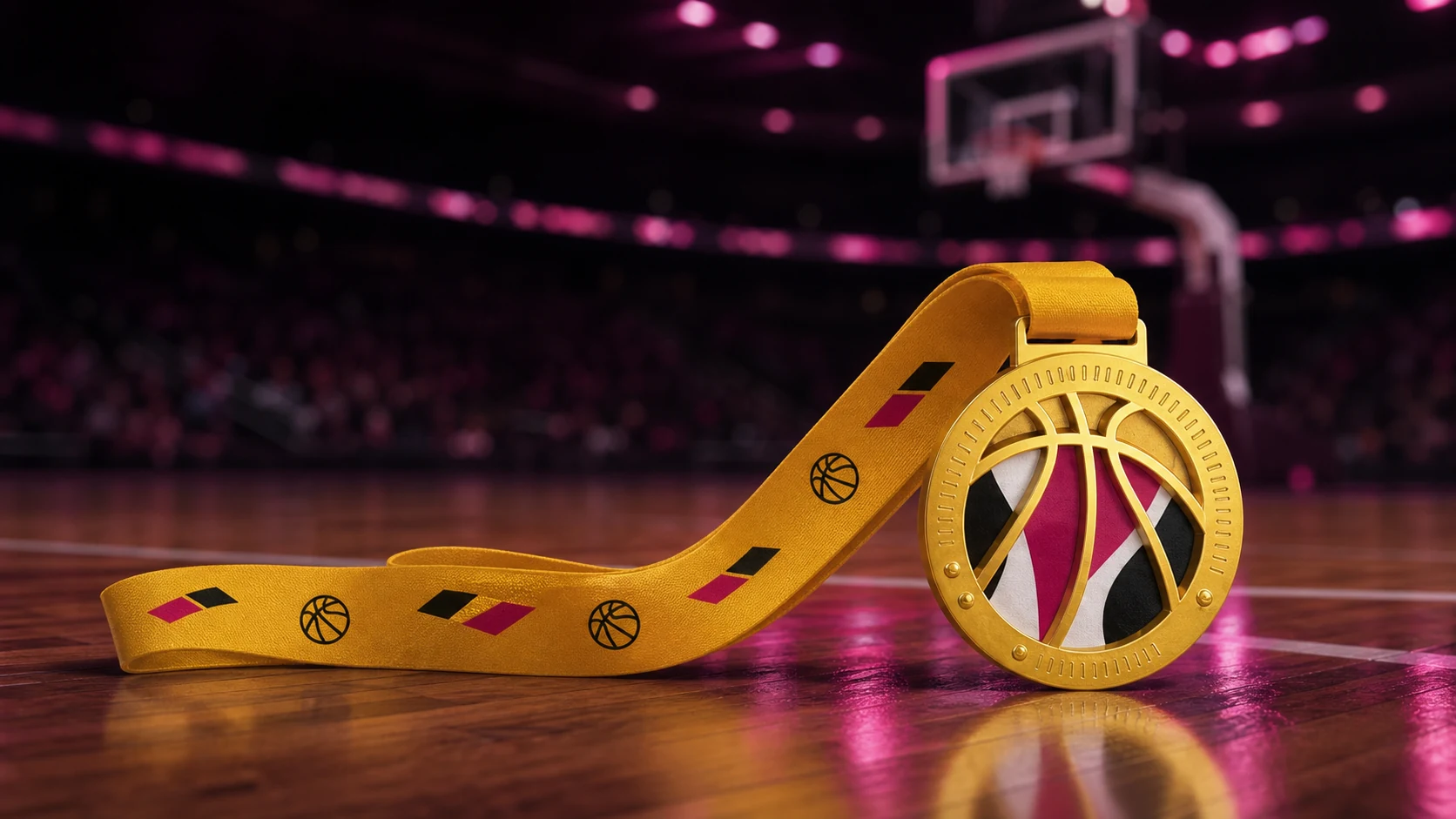
FINAL APPROVAL CHECKLIST
Before mass production, confirm all ten.
- Final width, height and maximum thickness
- Actual material and complete construction
- Calculated sample weight and approved actual weight
- Relief depth, openwork and fragile-area review
- Edge comfort and attachment strength
- Front, back, plating, color and numbering details
- Ribbon width, length, print, seam and hanging balance
- Individual pack, separator and presentation requirements
- Pieces per carton, carton weight and delivery method
- Signed physical sample and bulk inspection criteria
VISIBLE FAQ
Frequently asked questions about oversized custom medals.
What size is an oversized custom medal?
There is no universal industry standard. For planning in this guide, oversized custom medals start at 80 mm in their longest dimension. The right size still depends on artwork, material, thickness, weight, ribbon, packaging and how the medal will be worn or presented.
How much does an oversized medal weigh?
There is no reliable weight from diameter alone. Weight changes with material density, thickness, shape, relief, cutouts, recessed areas, added layers and attachments. Ask for a calculated estimate from the approved 3D construction, then confirm the result with a physical sample.
Which material is best for a large custom medal?
Zinc alloy is often practical for detailed relief, openwork and irregular shapes. Iron or brass can suit flatter or die-struck concepts, while acrylic, wood or mixed-material construction can reduce weight or create a different visual effect. The best choice follows the artwork, target feel, quantity and budget.
How can an oversized medal be made lighter?
Reduce average thickness, open nonessential areas, hollow or recess the back, simplify heavy relief, use lighter inserts, divide the design into engineered layers or reduce the overall footprint. Any change should preserve strength around the ribbon loop, thin bridges and projecting details.
Does an oversized medal need a wider ribbon?
Often, yes. A larger medal can look and hang better with a wider ribbon, but width alone is not enough. Confirm ribbon material, length, print method, attachment hardware, seam strength, balance and whether the medal twists when worn.
Should I order a sample before mass production?
Yes. A physical sample is strongly recommended because a screen proof cannot confirm real weight, balance, edge comfort, relief, plating, ribbon performance, packing fit or the experience of wearing the medal.
What should I send for an oversized medal quotation?
Send the longest dimension, shape or artwork, estimated quantity, destination country, required date, preferred material and finish, thickness or target feel, ribbon requirements, packaging, and any weight or budget limit. Reference images are useful when final artwork is not ready.
Are oversized medals suitable for bodybuilding competitions?
Yes. Oversized medals can create a trophy-like presentation for bodybuilding competitions, powerlifting championships and other high-impact award moments. The design should still control weight, wearer comfort, ribbon balance and protective packaging.
PLAN BEFORE TOOLING
Turn an ambitious medal idea into a reviewable specification.
Share the use, artwork, size range, quantity, destination and required date. C-Creation can help compare materials, construction, weight-control options, ribbon, packaging, sampling and delivery.