
A budget-conscious pterosaur collection with the weight of history.
Five coordinated museum-shop products, 1,000 pieces per item, developed around one original pterosaur visual system and delivered by DDP air.
- Collection
- 5 products
- Quantity
- 5,000 pcs total
- Timeline
- 10-day sample · 20-day bulk
Control cost without making the collection feel generic.
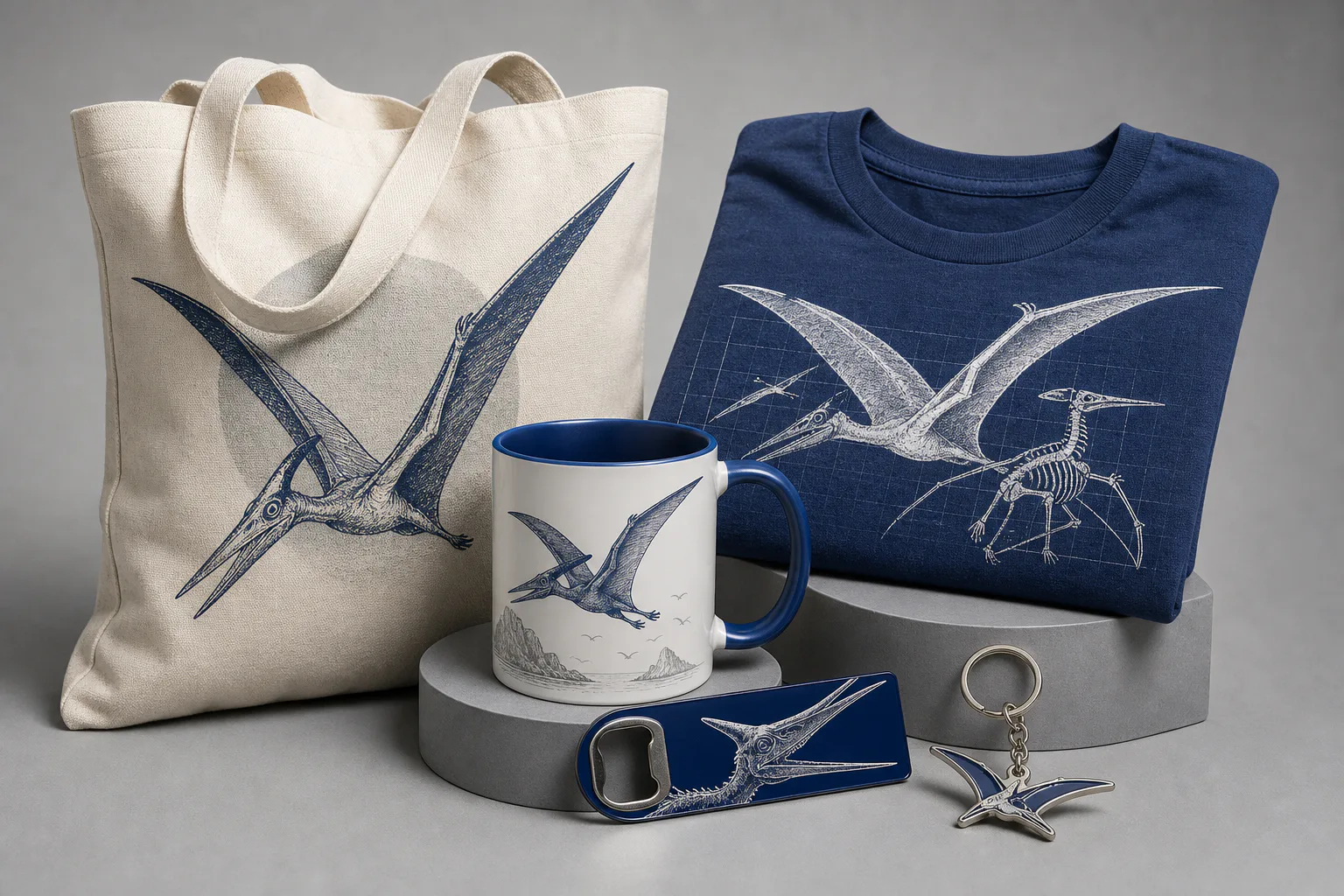
A U.S. museum wanted a retail-ready pterosaur merchandise range with a strong historical character. The assortment included mugs, T-shirts, canvas tote bags, bottle openers and keychains, with 1,000 pieces of each item.
The commercial challenge was clear: protect the budget while giving all five products enough design unity and visual substance to belong in a natural-history museum shop.
One theme, five practical museum-shop formats.
Custom mugs
A familiar gift format with generous printable area and strong perceived value.
Pterosaur T-shirts
Wearable storytelling using a historically weighted navy-and-ivory visual language.
Canvas tote bags
A useful, reusable souvenir suited to bold line illustration.
Bottle openers
An existing functional format customized through surface graphics rather than new tooling.
Custom keychains
A compact, accessible museum souvenir designed to carry the same collection identity.
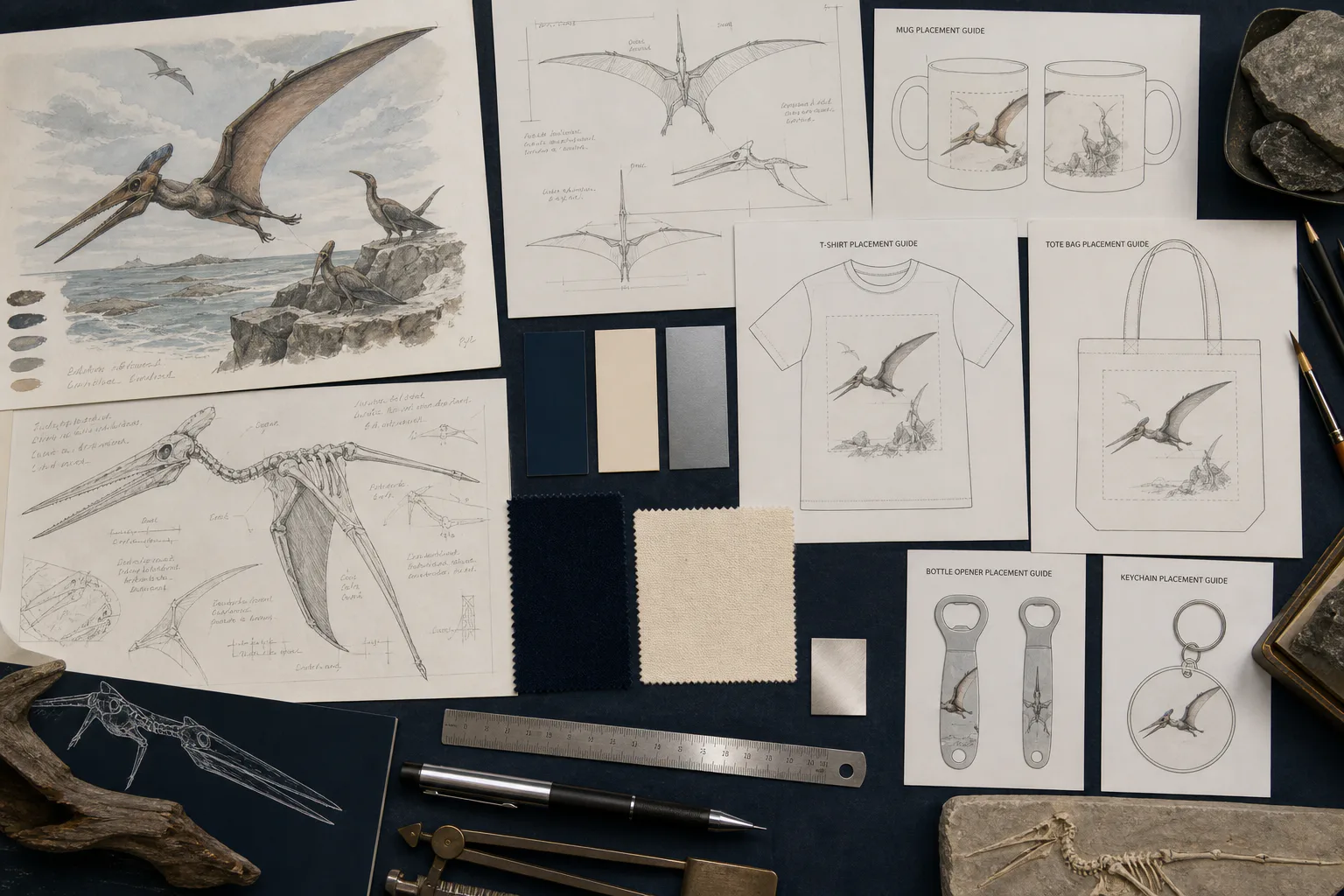
We customized proven product bases instead of creating unnecessary new molds.
The design strategy started with existing product structures wherever possible. The pterosaur theme was then added through coordinated graphics, color, print placement and surface treatment.
- Reduced avoidable mold and tooling costs
- Limited separate design-development charges
- Shared one visual system across all product categories
- Kept each product recognizable as part of the same collection
This approach is especially useful for museum buyers who need multiple SKUs at controlled landed cost.
A 10-day sample stage protected the 20-day production run.
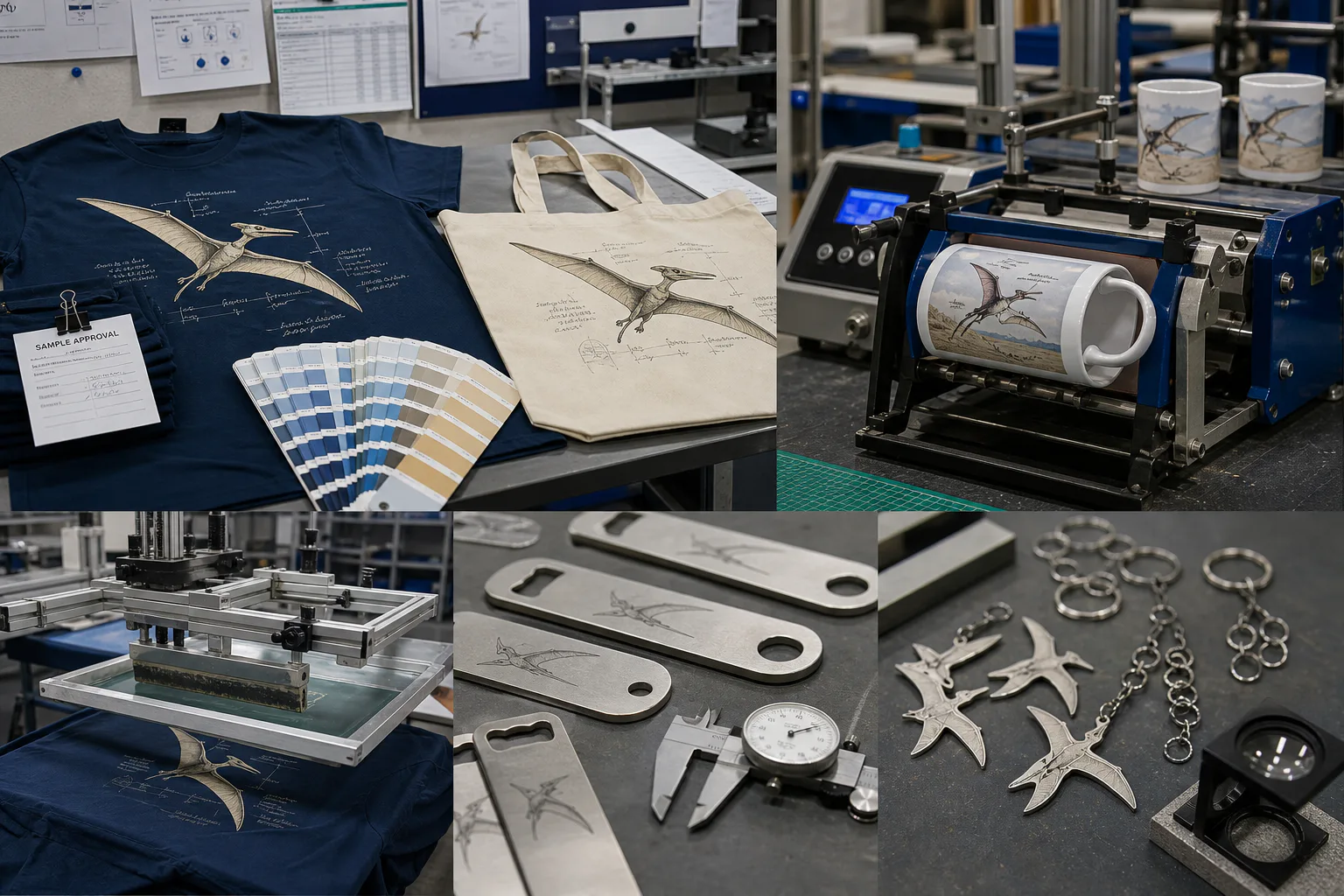
Sampling aligned artwork scale, color, product placement and finish before bulk production. Once the coordinated samples were approved, the five 1,000-piece runs moved into mass production and quality control.
- Artwork adaptationOriginal pterosaur graphics prepared for five different printable or metal surfaces.
- 10-day samplingCollection consistency, color and placement checked before approval.
- 20-day bulk productionFive SKUs scheduled as one coordinated museum-merchandise program.
Practical protection for retail display and DDP air delivery.
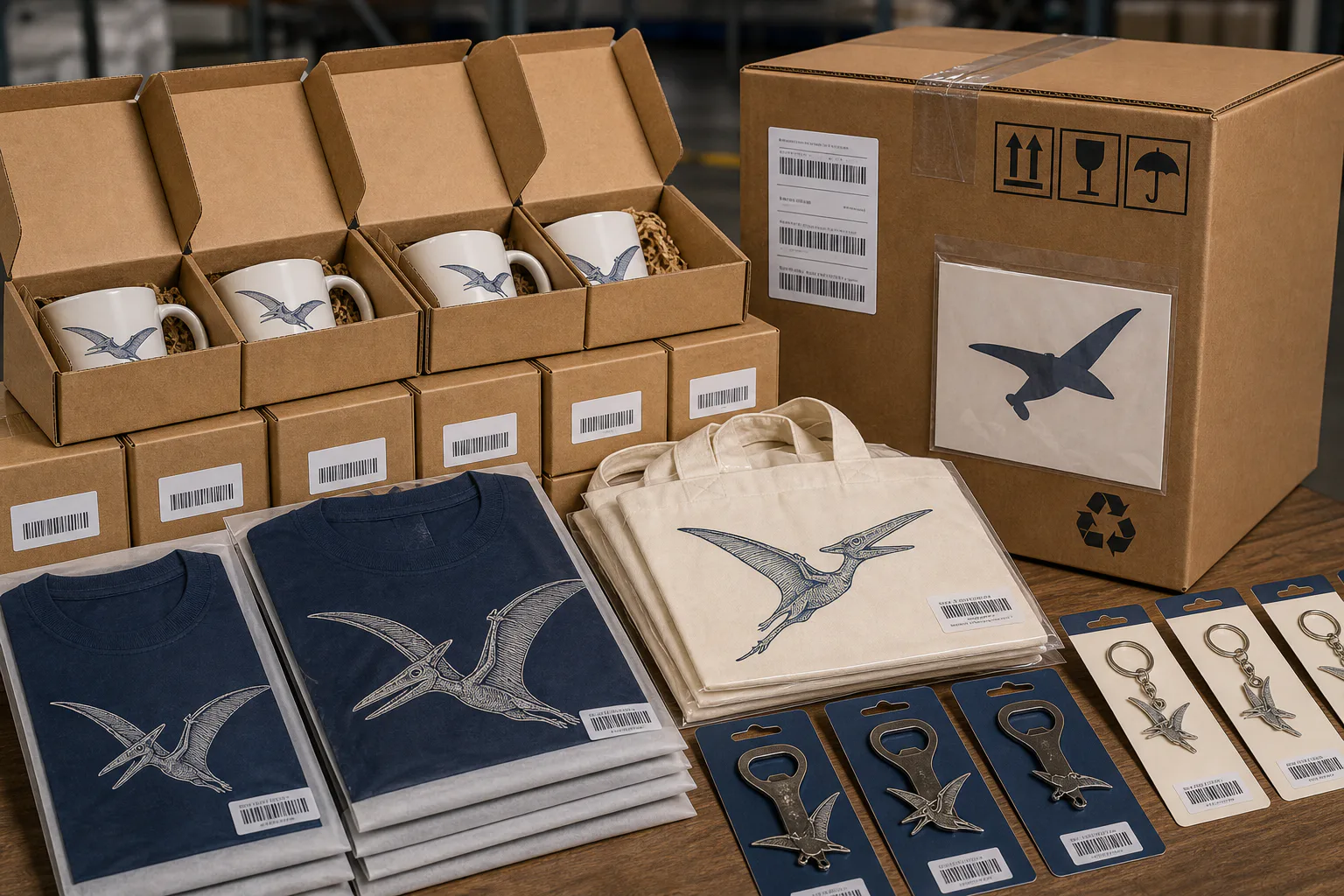
Packaging was planned by product type: protective mug cartons, folded apparel sleeves, tote-bag protection, and coordinated backing cards for the smaller metal items. The five product groups could then be consolidated for air freight.
DDP air delivery gave the U.S. museum one landed solution covering export handling, international transport, import clearance, duties and final delivery according to the confirmed quotation.
Museum merchandise sourcing questions
How can a museum develop several products without paying for new molds for every item?
Start with proven product bases and build differentiation through original artwork, color, print placement, surface treatment and coordinated packaging. New tooling can be reserved for products where shape is essential to the concept.
Can mugs, T-shirts, tote bags, bottle openers and keychains be managed as one order?
Yes. Multiple categories can be sampled, produced, inspected, packed and shipped as one coordinated museum merchandise program.
What was the quantity for this U.S. museum project?
The collection contained five products at 1,000 pieces each, for a total of 5,000 pieces.
How long did sampling and production take?
The sample stage took 10 days, followed by 20 days for mass production after approval.
Can museum merchandise be shipped DDP to the United States?
Yes. A confirmed DDP air quotation can include export handling, international air freight, U.S. import clearance, duties and final delivery.
Build more SKUs from one strong story.
Share the theme, product list, quantity, budget and required delivery date. We will recommend where existing formats can save tooling costs—and where fully custom construction will create more value.
Discuss your museum project